Two critical vulnerabilities in one week: how we kept our cloud secure
26.10.2026 | News | Luca Albrecht
Last week, the IT industry faced two critical vulnerabilities within days of each other. On Monday, October 19, PwnEscape (CVE-2026-99999) was disclosed: a long-standing flaw in the IPv4 networking code of the Linux kernel that allowed a virtual machine to break out of isolation and read host memory. On Wednesday, October 21, the PHP project released emergency patches for PHP2Shell (CVE-2026-109618 and CVE-2026-109619), two critical remote code execution flaws in the PHP runtime, with active exploitation already observed in the wild.
As soon as details on PwnEscape were available, our security team assessed the impact on our infrastructure. All KVM-based host systems were updated, following our established change management processes enabled by targeted monitoring.
When the PHP2Shell emergency patches landed on Wednesday, we were ready. Our insight published that same day confirmed that we would apply the patches as soon as they became available. Within hours of the release, all affected PHP versions in our cloud were updated to the patched releases 8.2.35, 8.3.36, 8.4.27, and 8.5.12.
Transparent communication with customers was a priority, so we published a follow-up insight confirming that the issue was fully mitigated across all systems. Today, both vulnerabilities are closed in our infrastructure, and our monitoring detected no exploitation on our systems.
This week showed that our continuous monitoring, incident processes, and patching speed work when it matters. We will keep acting with the same speed and transparency whenever the security of our systems and the data of our customers is at risk.
More News
27.10.2026 | Events
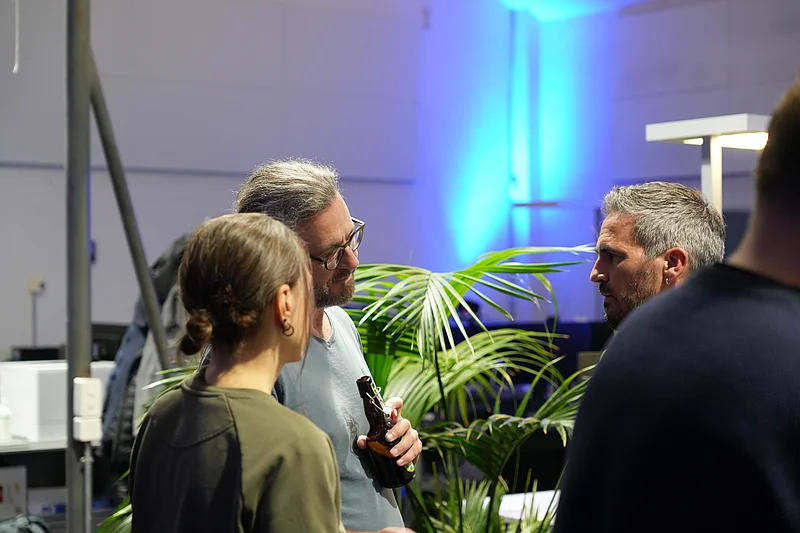
Retrospection on the B2B Table Football Event 2026
On Wednesday, 21 October 2026, netiva's location in Liebefeld-Bern hosted the B2B Table Football Event 2026. Once again, business met play: an evening…

26.10.2026 | News
Two critical vulnerabilities in one week: how we kept our cloud secure
Last week, two critical vulnerabilities hit the IT industry within days of each other: PwnEscape in the Linux kernel and PHP2Shell in the PHP runtime.…

22.10.2026 | News
ISO/IEC 27001:2022 successfully recertified and the ISMS extended to include cloud security and data protection
On the 22nd of October 2026, we successfully completed our annual external audit. As a result, our Information Security Management System (ISMS)…
21.10.2026 | Maintenance window
PHP2Shell vulnerability: The security issue is fully mitigated across all systems
PHP2Shell is the name given by the security community to two critical vulnerabilities in PHP (CVE-2026-109618 and CVE-2026-109619). Exploiting these…
21.10.2026 | Maintenance window
PHP2Shell vulnerability: Critical security vulnerabilities in PHP, we will apply the patch as soon as it becomes available
PHP2Shell is the name given by the security community to two critical vulnerabilities in PHP (CVE-2026-109618 and CVE-2026-109619). Exploiting these…
20.10.2026 | News
gpt-oss-120b: OpenAI’s open reasoning model now on Swiss infrastructure
Apache 2.0 licensed, with a Mixture-of-Experts architecture, a 128k-token context window and adjustable reasoning effort from low to high. Ideal for…